
9to5 Networks is your single, expert solution for all digital needs. We offer integrated web design, development, and marketing to streamline your online strategy.
Get In Touch
Call Now
Quick Email
Office Address

 Frequently Asked Questions
Your Questions, Our Answers
What services does 9to5 Networks offer?
We provide end-to-end digital solutions, including website development, mobile applications, digital marketing, creative design, enterprise technologies, video production, and ongoing technical support. Every service is tailored to help businesses build, manage, and grow their digital presence.
What industries do you work with?
We work with businesses across industries, including aviation, education, hospitality, healthcare, manufacturing, retail, real estate, and technology. Our adaptable approach enables us to deliver customized digital solutions for organizations of every size
Can 9to5 Networks redesign my existing website?
Absolutely! Whether you want a complete overhaul or subtle improvements, we specialize in transforming outdated websites into modern, high-performing platforms.


Have any questions?
How long does it take to complete a project?
Project timelines depend on the scope and complexity of your requirements. Standard business websites are typically completed within 2–4 weeks, while larger web platforms, mobile applications, and enterprise solutions may require additional development time.
Will my website be mobile-friendly?
Absolutely! Every website we build is fully responsive, ensuring a seamless experience across all device's mobiles, tablets, and desktops. Our design approach focuses on mobile-first optimization perfectly.
Can you help with SEO and digital marketing too?
Yes. Along with website development, we provide SEO, social media marketing, content strategy, branding, and performance-driven digital marketing solutions. Our goal is to increase your online visibility and generate measurable business growth.
Do you offer content creation and branding services too?
Yes. Our creative services include logo design, brand identity, marketing collateral, UI/UX design, promotional graphics, and professional video production. We help businesses build a strong, consistent, and memorable brand presence.
Why should I choose 9to5 Networks for my website?
We combine creativity, technical expertise, and strategic thinking to deliver reliable digital solutions that create measurable business value. Our focus on quality, and long-term support makes us a trusted technology partner.
Do you provide ongoing support after the website is live?
Yes. We offer continuous website maintenance, technical support, hosting assistance, security updates, performance optimization, and content management. Our dedicated support ensures your digital platforms remain secure, efficient, and ready for future growth.
Website Solutions
Which type of website is right for my business?
Working with one digital partner ensures consistent branding, streamlined communication, faster project delivery, seamless collaboration, and integrated solutions that drive long-term business growth and digital success.
What is included in Website Design and Development?
Website Design and Development can include planning, responsive design, website development, user experience, functionality, performance optimization, and features tailored to your business requirements.
Can my website be expanded as my business grows?
Yes. At 9to5 Networks, we develop website solutions with future growth in mind, allowing additional pages, features, integrations, and functionality to be added as your business requirements evolve.

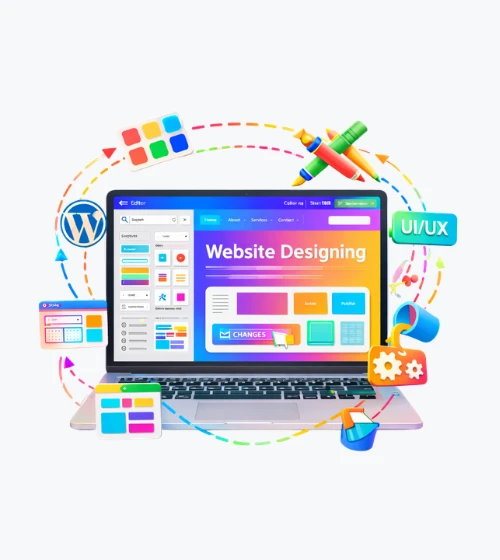
Static Website
What is Static Website Development?
Static Website Development involves creating websites where individual pages are delivered as pre-built files rather than being generated dynamically from a database for every visitor.
Can a static website be upgraded in the future?
Yes. Static websites can easily be expanded with additional pages, features, and advanced functionalities as your business requirements evolve
Is Static Website Development suitable for SEO?
Yes. A properly structured static website can provide a strong SEO foundation through fast performance, clean page structures, optimized content, responsive design, and search-friendly navigation.
Will my static website work smoothly on all devices?
Absolutely. Every website is designed to provide a consistent and optimized experience across desktops, tablets, and mobile devices.
Why is a static website a good choice for my business?
Static websites offer fast loading speeds, enhanced reliability, and a streamlined experience, making them ideal for businesses seeking a professional and efficient online presence.
Dynamic Site
Are dynamic websites mobile-friendly?
Absolutely. Every dynamic website is developed to provide seamless functionality and optimized experiences across desktops, tablets, and mobile devices.
Can I update the website content myself?
Yes. A content management system can allow your team to update pages, images, articles, products, and other website information without requiring technical assistance for every change.
Can a dynamic website grow with my business?
Yes. Dynamic websites are built with scalability in mind, allowing additional features, pages, and functionalities to be integrated as business needs expand.
Why should I choose a dynamic website for my business?
Dynamic websites provide flexibility, personalized experiences, and advanced functionality, making them ideal for businesses that regularly update content or require interactive features.
Can a dynamic website be customized according to my business?
Yes. Dynamic Website Development can be tailored to your specific business requirements. Features, layouts, databases, integrations, and user functionality can all be developed according to your objectives.
Blogs And Portals
Can users search and filter content?
Yes. Search functionality, categories, tags, filters, and organized navigation can be incorporated to help visitors quickly find relevant information.
Can I manage the content myself?
Yes. We can provide easy-to-use content management functionality so your team can publish, edit, organize, and update content without requiring advanced technical knowledge.
How long should a good, effective blog post be?
The length should be determined by user search intent. For complex topics, 1,500-2,500 words are common to build authority; for simple queries, a concise 500-word answer is better.
Why should businesses invest in blogs or portals?
Blogs and portals help businesses share valuable information, strengthen brand authority, and create stronger engagement with their audience.
Will the platform perform well with increasing traffic and content?
Yes. Our solutions are built with scalability in mind to ensure smooth performance as content volume and user activity grow.
E-Commerce Development
Can I manage products and inventory on my own?
Yes. We develop user-friendly systems that allow you to easily manage products, pricing, inventory, and orders without technical expertise.
Can my online store be optimized for search engines?
Yes. We can structure your e-commerce website with SEO-friendly page structures, product content, category organization, mobile optimization, and other search-focused elements to improve visibility.
Can my e-commerce website be expanded in the future?
Yes. Our e-commerce development solutions are designed to be scalable. New products, features, integrations, payment options, and other functionality can be added as your business requirements evolve.
Can multiple payment methods be integrated into my store?
Absolutely. We can integrate multiple payment gateways and payment methods to ensure a convenient checkout experience for your customers.
Will my online store be optimized for performance and search visibility?
Yes. Our e-commerce solutions are built with optimized performance and SEO-friendly structures to improve visibility and user experience.
Mobile Apps
What is involved in developing a mobile application?
Mobile app development typically involves understanding requirements, planning the application structure, designing the user interface, developing features, integrating required services, testing functionality, and preparing the application for deployment.
What types of mobile applications can 9to5 Networks develop?
We develop custom mobile applications for businesses, startups, and organizations, including customer-facing apps, business tools, booking platforms, service applications, and other solutions tailored to specific requirements.
Can you develop a mobile application based on our specific business requirements?
Yes. We develop applications around the business objectives, target users, required features, workflows, and technical requirements of each project, creating a solution tailored to its intended use and audience.
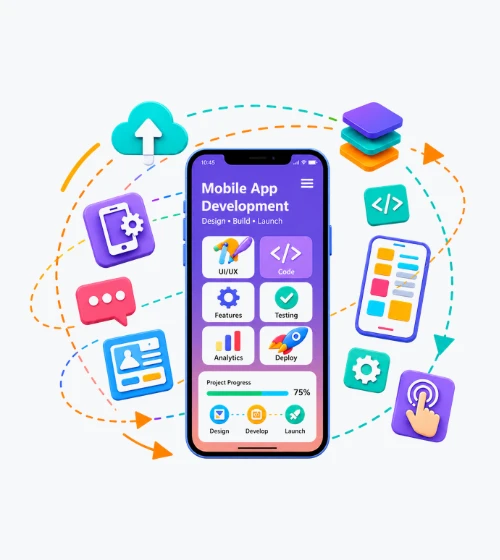
Mobile App Development
How long does it take to develop a mobile application?
The development timeline depends on features, complexity, and project requirements.
Why should my business invest in mobile app development?
The development timeline depends on features, complexity, and project requirements. We focus on delivering efficient solutions without compromising quality.
Can you integrate third-party services into a mobile application?
Yes. Mobile applications can integrate APIs, payment gateways, authentication services, cloud platforms, maps, notifications, analytics tools, and other third-party services according to project requirements
Can additional features be added after the application is launched?
Absolutely. Applications can be expanded with new features, integrations, and functionalities as business requirements evolve.
Can my mobile application work on both Android and iOS platforms?
Yes. We develop cross-platform and native applications designed to deliver seamless experiences across Android and iOS devices.
Kotlin Android Apps
Will my application be secure and scalable?
Yes. Every application is developed with security practices and scalable architecture to support long-term growth and reliability.
Can my application be updated after launch?
Yes. Applications can be enhanced after deployment with new features, design improvements, integrations, performance updates, and other functionality as your business needs evolve.
Can Kotlin applications support advanced features?
Yes. Kotlin applications can support features such as APIs, payment integrations, notifications, real-time updates, and custom functionalities.
Why should I choose Kotlin for Android app development?
Kotlin offers modern development capabilities, cleaner code structure, improved performance, and enhanced reliability for Android applications.
How long does it take to develop a Kotlin Android application?
The development timeline depends on the application's features, complexity, integrations, and overall requirements.
React Native Apps Development
Can the application be updated after launch?
Yes. Applications can be updated with new features, performance improvements, design changes, integrations, and security updates.
Is React Native suitable for business applications?
Yes. React Native can be used for customer applications, booking platforms, business tools, service applications, e-commerce solutions, and other custom mobile products.
Will the application work on both Android and iOS?
Yes. React Native applications are designed to provide consistent functionality and experiences across Android and iOS devices.
Why should I choose React Native for app development?
React Native allows applications to be developed for multiple platforms using a shared codebase, reducing development time while maintaining performance.
Can React Native applications support advanced features?
Yes. React Native applications can integrate APIs, payment systems, notifications, real-time features, and custom functionalities.
Flutter, Cordova & Hybrid Apps
Is Flutter suitable for business applications?
Yes. Flutter can be used for customer-facing platforms, business tools, service applications, booking systems, and other custom mobile solutions.
How long does hybrid app development take?
Development time depends on the application's features, complexity, integrations, number of platforms, design requirements, and testing needs. A simple application may require less development time.
Will my application work on both Android and iOS?
Yes. Hybrid applications are developed to provide seamless functionality and consistent experiences across Android and iOS devices.
Why should I choose Flutter or hybrid app development?
Flutter and hybrid technologies can help businesses develop applications for multiple platforms using efficient development approaches.
Can new features be added after the application is launched?
Yes. Applications can be upgraded with new features, interface improvements, integrations, and other functionality as business requirements evolve.
Digital Marketing
What does digital marketing include?
Digital marketing can include SEO, social media marketing, content marketing, paid campaigns, audience targeting, and performance tracking, depending on the business goals and digital strategy.
How can digital marketing help my business?
A well-planned digital marketing strategy can help businesses improve online visibility, reach relevant audiences, strengthen engagement, generate opportunities, and build a stronger digital presence.
How do you create a digital marketing strategy?
We begin by understanding your business, target audience, goals, and existing digital presence. We then develop a strategy that combines relevant marketing channels, content, campaigns, and performance tracking.
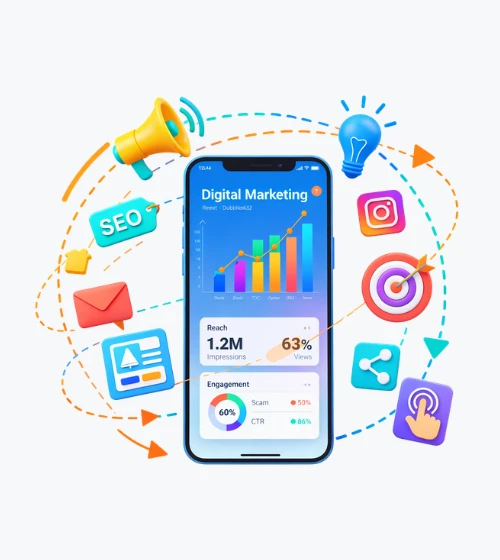
Search Engine Optimization
Can SEO services help a new website?
Starting SEO early helps establish a strong technical and content foundation by optimizing the website structure and content for future organic growth.
What is included in your SEO services?
Our SEO approach can include keyword research, technical SEO, on-page optimization, content optimization, internal linking, website audits, performance tracking, and SEO reporting.
Does SEO only focus on text-based content?
No, modern SEO is holistic. It includes technical optimization, image optimization, and improving the overall user experience across all devices.
Why is SEO important for my business today?
Posting frequency depends on your audience and strategy, so we develop content plans designed to maintain consistent engagement and visibility.
How long does it take to see results from SEO?
Meaningful, measurable SEO results typically begin appearing within 4 to 6 months, making it a long-term investment focused on stability.
Social Media Marketing
Can social media marketing help generate leads?
Yes. Social media can support lead generation through targeted content, campaigns, advertising, calls to action, and strategic audience targeting.
Do you provide social media performance reports?
Yes. Performance can be monitored through metrics such as reach, engagement, audience growth, content performance, campaign results, and conversions where applicable.
How often should content be posted on social media?
Posting frequency depends on your audience and strategy. We develop content plans designed for consistent engagement and visibility.
Can you create content for my social media accounts?
Yes. We provide content planning, creative designs, captions, and campaign strategies tailored to your brand.
Which social media platforms are best for my business?
The ideal platforms depend on your business goals, industry, and target audience. We help identify channels that align with your objectives.
Content Strategy
Can content strategy improve SEO?
Yes. A structured content strategy can support SEO by identifying relevant topics, organizing content around user needs, improving topical relevance, and creating opportunities for internal linking.
How do you decide what content works best?
We analyze audience behavior, business objectives, industry trends, and platform requirements to develop effective content plans.
Why does my business need a content strategy?
A content strategy helps create consistent messaging, strengthen brand identity, and improve audience engagement across multiple channels.
How often should a content strategy be reviewed?
Content strategies should be reviewed periodically based on performance, audience behavior, business changes, and new opportunities.
Can content strategies be customized for different businesses?
Yes. Every strategy is tailored according to business goals, target audience, industry requirements, and communication objectives.
Analytics and Reporting
How often can performance reports be generated?
Reports can be generated daily, weekly, or monthly, with flexible reporting schedules tailored to specific business requirements, goals, and performance tracking needs.
Can analytics help improve marketing performance?
Yes. Analytics can identify which campaigns and channels are performing well, helping businesses make better decisions about marketing strategies.
What can be measured through analytics and reporting?
Analytics can help measure website traffic, audience behaviour, engagement, conversions, campaign performance and lead generation.
Why are analytics and reporting important for my business?
Analytics and reporting help businesses understand user behavior, measure performance, and track website, campaign, audience, and traffic patterns.
Can reports be customized according to business requirements?
Yes. Reporting dashboards and metrics can be tailored to align with specific business goals and performance indicators.
Creative Design
What does creative design include?
Creative design can include visual concepts, marketing creatives, digital assets, promotional materials, and other design solutions created to support your brand and communication needs.
How do you approach a creative design project?
We begin by understanding your brand, audience, objectives, and design requirements. We then develop visual concepts that combine creativity, clarity, and consistency with your overall brand identity.
Can creative designs be customized for my business?
Yes. Each design can be tailored to your brand style, communication goals, target audience, and intended use, ensuring the final visuals are relevant to your business and its identity.
Graphic Designing
Can I request revisions to the designs?
Absolutely. We work closely with clients and provide revisions to ensure the final design aligns with expectations.
Do you create designs for both digital and print use?
Yes. Our graphic design solutions can be prepared for digital platforms as well as print materials, including social media, websites, brochures, flyers, banners, and business stationery.
What types of graphic design services do you provide?
We provide a wide range of design solutions including social media creatives, marketing materials, promotional designs, banners and business assets.
Can designs be customized according to my brand identity?
Yes. Every design is created according to your brand style, colors, goals, and communication requirements.
Can designs be customized according to my brand identity?
Yes. Every design is created according to your brand style, colors, goals, and communication requirements.
Logo and Business Cards
Can my business card match my logo?
Yes. Your business card can be designed using the same logo, colors, typography, and visual elements to create a consistent and brand identity.
Can the logo be used for both digital and print?
Yes. Logo designs can be prepared in suitable formats for websites, social media, stationery, advertisements, packaging, business cards, and other digital or print applications.
Can I get a logo and business card designed together?
Absolutely. Designing both together helps ensure that the logo, typography, colors, and overall visual style work together as one consistent brand identity.
Can the logo design be customized according to my business?
Yes. Each design can be developed around your business, industry, target audience, preferred style, and overall brand requirements.
Why is professional logo and business card design important?
Professional branding can help create a stronger first impression, improve recognition, and present your business more consistently across customer and professional interactions.
Brand Collateral
Why is brand collateral important for businesses?
Brand collateral helps businesses communicate consistently across different platforms and customer interactions.
What is included in Brand Collateral Design services?
Brand collateral can include brochures, flyers, company profiles, presentations, advertisements, and other branded digital or print assets.
Can collateral designs match my existing brand identity?
Yes. Designs can be developed according to your existing brand guidelines, including your colors, typography, logo, imagery, layouts, and overall visual style.
Can brand collateral be created for both print and digital use?
Absolutely. Designs can be prepared for printed materials as well as digital formats such as PDFs, presentations, websites, email campaigns, and social media platforms.
Can you create multiple collateral items with a consistent design?
Yes. Multiple assets can be developed using the same visual direction, so brochures, flyers, company profiles, presentations, and promotional materials maintain a consistent and recognizable brand identity.
Resume and CV Designing
Can I request an editable resume format?
Yes. Resume designs can be provided in editable formats, allowing you to update your experience, skills, qualifications, and achievements.
Why is an ATS-friendly resume important?
Applicant Tracking Systems scan resumes for relevant keywords, so clear formatting and structured content make your resume easier for systems.
What is included in resume and CV designing?
Resume and CV designing can include professional layouts, content organization, visual hierarchy, ATS-friendly formatting, section structuring, and editable document formats.
What is the difference between a resume and a CV?
A resume is generally a concise summary of your professional experience, skills, and qualifications, while a CV is usually a more detailed document that may include academic, and other relevant achievements.
Can resumes be designed for freshers and experienced professionals?
Yes. We create customized resume solutions for students, freshers, experienced professionals, career changers, and senior-level candidates across different industries.
Web Technologies
What do web technology services include?
Web technology services include frontend and backend development, content management systems, web applications, software integrations, and other technical solutions designed to support business requirements.
How do web technologies benefit my business?
Modern web technologies help businesses build reliable digital platforms, improve operational efficiency, enhance user experiences, and establish a strong technical foundation for long-term growth.
How do you approach web technology projects?
We begin by understanding your business objectives, technical requirements, and project scope. Based on these needs, we plan and develop solutions using suitable technologies, frameworks, and development practices.
WordPress CMS
Why should I choose WordPress for my website?
WordPress offers flexible content management, extensive customization, and diverse functionality for business websites, blogs and portfolios
Can I update my WordPress website without technical knowledge?
Yes. WordPress provides a user-friendly content management interface that allows businesses to update pages, images, articles, and other website content without requiring advanced technical knowledge.
Can you create a custom WordPress website?
Yes. Our WordPress CMS Development services can be customized according to your business requirements, including website structure, design, functionality, forms, integrations, and content management needs.
Can WordPress websites be optimized for SEO?
Yes. A WordPress website can be structured with SEO-friendly elements such as organized content, responsive design, optimized page structures, internal linking, and appropriate technical configurations.
Do you provide WordPress website support?
Yes. We can assist with website improvements, updates, functionality changes, integrations, and ongoing management based on your requirements.
Web & Software Tech Stack
Can the technology stack support future growth?
Absolutely. We focus on scalable technologies and organized architectures that allow additional features, and functionality as your business grows.
Why is selecting the right technology stack important?
The right technology stack can significantly influence the performance, scalability, security, maintainability, flexibility, and overall efficiency of your digital solution, ensuring it remains reliable and adaptable as your business grows.
Can different technologies work together in one project?
Yes. Different front-end, back-end, database, API, and cloud technologies can work together when they are technically compatible and appropriate for the project's requirements.
Which technologies can be included in a web software tech stack?
Depending on the project, a stack can include front-end frameworks, back-end technologies, databases, APIs, cloud platforms, development tools, content management systems, and third-party integrations.
Can stacks be customized according to project requirements?
Yes. Every web software tech stack is selected based on business goals, project complexity, required functionality, and expected usage.
React.js Frontend
Will React.js websites work across all devices?
Absolutely. React.js solutions can be developed with responsive layouts that provide consistent experiences across desktops, tablets, and mobile devices.
Can React.js support complex web applications?
Yes. React.js can be used to develop complex interfaces for dashboards, customer portals, e-commerce platforms, business applications, and other interactive digital solutions.
Can an existing website be migrated to React.js?
Yes. Existing websites and interfaces can be rebuilt or migrated to React.js depending on their current structure, functionality, technical requirements, and business objectives.
Can React.js integrate with APIs and other technologies?
Yes. React.js applications can connect with APIs, authentication systems, databases, payment services, and various back-end technologies to create complete digital solutions.
Why should I choose React.js for frontend development?
React.js provides a flexible approach to developing dynamic and interactive interfaces. Its component-based structure can also make applications easier to maintain, update, and expand as requirements change.
Pega CRM Automation
Can APIs and third-party services be integrated?
Absolutely. Node.js, Express, and Laravel applications can be integrated with payment systems, and other third-party services according to requirements.
Can these technologies support large-scale applications?
Yes. Node.js, Express, and Laravel can be used to develop scalable applications with growing user requirements, larger datasets, multiple integrations, and complex functionality.
Can Node.js, Express, and Laravel work with cloud platforms?
Yes. Applications built using Node.js, Express, and Laravel can be deployed on suitable cloud platforms, providing scalable hosting, reliable performance, flexible infrastructure, and easier management.
Can existing applications be upgraded using these technologies?
Yes. Existing applications can be reviewed and enhanced with new features, integrations, performance improvements, security updates, or additional modules according to business requirements.
Why should I choose Node.js, Express, or Laravel for development?
These technologies provide flexible options for developing modern web applications, APIs, and backend systems. The appropriate technology depends on factors such as project requirements, functionality and scalability.
Enterprise Tech
What does enterprise technology include?
Enterprise technology can include business applications, cloud solutions, automation platforms, system integrations, and other technology services designed to support complex business operations and workflows.
How can enterprise technology improve business operations?
Enterprise technology can help businesses streamline workflows, automate repetitive processes, improve collaboration, manage information efficiently, and create more connected and reliable business operations.
Can enterprise technology solutions be tailored to business needs?
Yes. Enterprise solutions can be designed around specific business processes, operational requirements, existing systems, and growth objectives, allowing technology to align with how your organization operates.
C# Application
Can additional modules be introduced later?
Absolutely. New functionalities, modules, integrations, and features can be introduced as business requirements evolve, depending on the existing application architecture and technical requirements.
Can C# applications integrate with existing systems?
Yes. C# applications can integrate with databases, APIs, enterprise platforms, authentication systems, reporting tools, and other business applications.
What types of applications can be developed using C#?
C# can be used to develop a wide range of applications, including business management systems, enterprise software, workflow applications, database-driven platforms, custom web solutions, internal tools, APIs, and other software solutions.
Can C# applications be developed for growing businesses?
Yes. C# applications can be designed with scalability and future development in mind. Additional functionality, integrations, users, and modules can be introduced as business requirements increase.
Can applications be customized according to business operations?
Yes. C# application development can be customized around specific workflows, user roles, business processes, functionality, integrations, and operational requirements.
ASP MVC Solutions
Can applications be expanded in the future?
Absolutely. Additional modules, integrations, and functionalities can be introduced as business requirements evolve, depending on the application's architecture and technical requirements.
Is ASP MVC suitable for enterprise applications?
Yes. ASP MVC supports web applications and APIs, with a structured approach for developing and maintaining complex applications.
What makes ASP MVC suitable for business applications?
ASP MVC creates a structured development environment that separates different application responsibilities. This can help improve development organization, simplify maintenance, and make applications easier to adapt as business requirements change.
Can ASP MVC support customized business requirements?
Yes. ASP MVC solutions can be developed around specific workflows, business operations, user requirements, integrations, and functional needs. This makes the architecture adaptable to different types of business applications.
Can ASP MVC applications integrate with existing systems?
Yes. Applications can be developed to work with databases, APIs, enterprise platforms, authentication systems, payment services, and other business systems depending on the technical requirements of the project.
Microsoft & Azure Solutions
Can Azure solutions scale as my business grows?
Yes. Azure provides scalable cloud services that can adapt to changing application workloads, users, data requirements, and business needs. This allows businesses to expand their technology environment as they grow.
Can Microsoft Azure Solutions help with cloud migration?
Yes. Microsoft Azure can support businesses moving applications, workloads, databases, and other digital resources to cloud environments.
Can cloud solutions support remote teams and operations?
Yes. Cloud-based solutions can provide authorized users with access to applications, data, and business resources from different locations. This can support collaboration and help businesses manage distributed teams and digital operations more efficiently.
How can Microsoft and Azure Solutions benefit my business?
Microsoft and Azure Solutions can help businesses improve scalability, security, performance, collaboration, and operational efficiency while supporting cloud-based applications, data management, and digital transformation.
Can Microsoft and Azure services integrate with existing systems?
Yes. Microsoft and Azure technologies can integrate with applications, databases, APIs, business platforms, and other existing systems when the required technical connections and architecture are supported.
Pega CRM Automation
What types of processes can be automated?
Processes like customer service, case management, approvals, onboarding, service requests, and other repetitive business activities can be automated.
Can Pega integrate with existing business systems?
Yes. Pega solutions can integrate with existing applications, databases, APIs, and third-party services depending on the technical requirements and architecture of the business environment.
How can Pega CRM automation benefit my business?
Pega CRM automation can help reduce repetitive manual activities, organize workflows, improve process visibility, and support more consistent customer interactions.
How long does it take to implement Pega CRM automation?
The implementation timeline depends on the complexity of the workflows, number of integrations, customization requirements, existing systems, and overall project scope.
Can Pega solutions be customized according to business requirements?
Yes. Pega solutions can be configured and customized around specific workflows, business rules, customer processes, integrations, and operational requirements.
Video Production
What does video production include?
Video production can include concept development, planning, scripting, filming, editing, post-production, and final delivery, depending on the purpose and requirements of the project.
How can professional video content benefit my business?
Professional video content can help businesses communicate ideas clearly, showcase products or services, engage audiences, strengthen brand presence, and create more effective visual communication across digital platforms.
Can video projects be customized for different business needs?
Yes. Video projects can be tailored to your business objectives, target audience, communication style, platform requirements, and preferred visual direction to create content suited to its intended purpose.
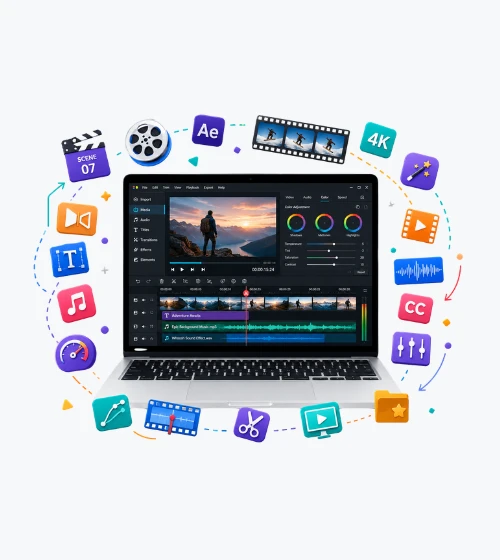
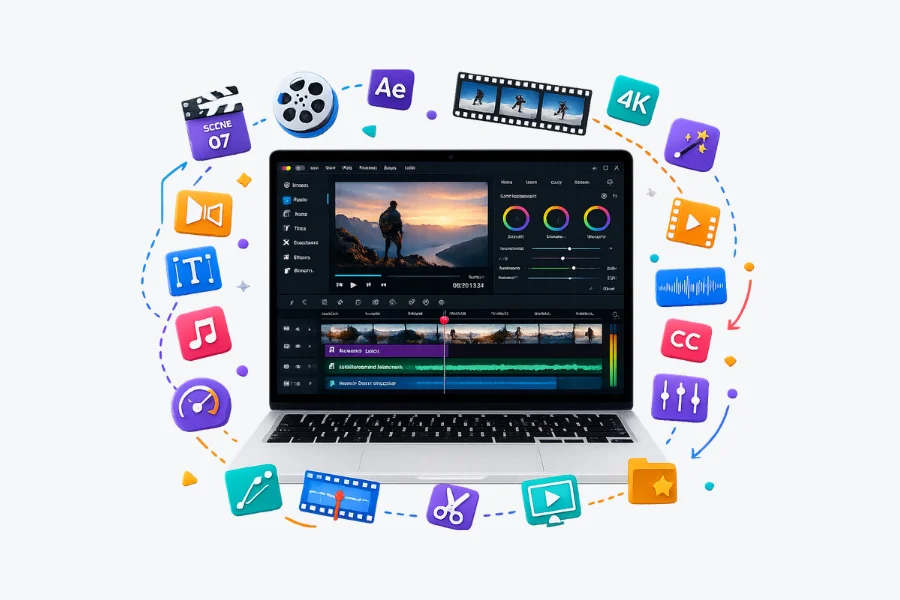
Video Editing and Production
Can you add motion graphics to videos?
Yes. Motion graphics, animated text, titles, visual elements, and transitions can be incorporated where appropriate to improve presentation and communication.
What types of videos can you create and edit?
We can create and edit promotional videos, corporate videos, product videos, brand stories, social media content, advertisements, presentations, service showcases, and other business-focused video content.
Can existing footage be professionally edited?
Yes. Existing footage can be edited, refined, organized, and enhanced with suitable transitions, audio adjustments, visual effects, colour correction, graphics, and other post-production elements.
Will videos be optimized for different platforms?
Yes. Video content can be prepared according to the requirements of different platforms, including websites, social media, presentations, advertisements, and other digital channels.
Do you provide complete video production solutions?
Yes. Depending on the project, our video editing and production services can cover different stages of the production process, from editing existing footage and adding visual elements to developing polished content around specific business and communication requirements.
Promotional Video Campaigns
How can promotional videos help my business?
Promotional videos help increase brand visibility, improve audience engagement, communicate key brand messages effectively, and showcase products or services in a more engaging and memorable way.
What types of promotional videos can be created?
We can create promotional videos for products, services, brand campaigns, advertisements, social media, product launches, corporate promotions, service showcases, and other marketing requirements.
Can promotional videos align with my brand identity?
Yes. Promotional videos can incorporate your brand colors, logo, typography, visual style, messaging, and overall creative direction to maintain consistency with your existing brand identity.
Can you create customized promotional video campaigns?
Yes. Each promotional video campaign can be customized according to your business objectives, target audience, industry, brand identity, campaign message, preferred style, and intended platform.
Can promotional videos be used for advertising campaigns?
Yes. Promotional videos can be adapted for digital advertising campaigns, social media promotions, website marketing, email campaigns, presentations, and other platforms based on campaign objectives, target audiences, and required formats.
Powerful Training Content Videos
Can existing training material be converted into videos?
Yes. Existing documents, presentations, procedures, manuals, guides, and other training resources can be transformed into structured video content where appropriate.
What types of training videos can 9to5 Networks create?
We can create employee onboarding videos, software tutorials, product training videos, instructional videos, process demonstrations, compliance-related training content, customer education videos, internal communication videos, and other customized learning content.
How do training videos ensure consistency across global teams?
Training videos provide a standardized way to communicate the same information to employees across different locations. Using consistent scripts, visuals, terminology, processes, and brand elements can help organizations.
Which types of training videos are most effective for a new hire?
Onboarding videos, workplace procedure tutorials, company introduction videos, software walkthroughs, role-specific training, and process demonstrations can be useful for new employees.
What is microlearning and why is it important for training videos?
Microlearning is an approach that divides larger subjects into short, focused learning units. For training videos, this can make individual concepts easier to consume, understand, and revisit.
On-Site Shooting & Post-Production
Can you provide multi-camera event coverage?
Yes. Multi-camera production can be used for events and projects requiring multiple perspectives, continuous coverage, dynamic shots, and professional-quality visual storytelling.
What is included in professional video production?
Professional video production can include planning, on-site shooting, camera coverage, audio capture, lighting considerations, footage selection, editing, color correction, sound refinement, graphics, transitions, and final delivery depending on the project requirements.
Can footage be optimized for different platforms?
Yes. Final video content can be prepared in different formats, dimensions, resolutions, and durations according to the requirements of websites, social media platforms, presentations, advertisements, and other digital channels.
Can businesses request customized video production?
Absolutely. Production can be customized according to the project objective, location, audience, brand identity, schedule, content requirements, and intended platform.
What types of on-site shooting services do you provide?
We can support corporate events, product launches, exhibitions, interviews, promotional activities, business events, product showcases, brand shoots, conferences, seminars, and other customized video production requirements.
Support Services
What do support services include?
Support services can include technical assistance, maintenance, troubleshooting, system monitoring, updates, and ongoing support designed to help businesses maintain reliable and efficient digital operations.
How can technical support help my business?
Reliable technical support can help businesses resolve issues efficiently, reduce disruptions, maintain system performance, and keep essential digital tools and services operating smoothly.
Can support services be tailored to business requirements?
Yes. Support services can be adapted to your systems, workflows, operational needs, and preferred level of assistance, providing relevant technical support as your business requirements evolve.
Website Support
Why is regular website maintenance important?
Regular maintenance helps improve website performance, reduce technical issues, and ensure smooth user experiences.
Is website support useful for growing businesses?
Yes. Growing businesses often require regular content updates, new functionality, technical improvements, and ongoing maintenance. Website support can help manage these requirements while reducing the technical workload for business teams.
Can website performance be monitored regularly?
Yes. Website performance can be reviewed regularly to identify loading issues, technical problems, responsiveness concerns, and other areas that may require optimization.
What does website support and management include?
Website support and management can include regular maintenance, performance monitoring, security updates, backups, troubleshooting, content updates, plugin and theme management, technical assistance, and ongoing optimization according to website requirements.
Can website content and information be updated regularly?
Yes. Website content such as text, images, service information, contact details, announcements, and other website elements can be updated regularly according to business requirements.
Billing Software Support
Why is regular website maintenance important?
Regular maintenance helps improve website performance, reduce technical issues, and ensure smooth user experiences.
Is website support useful for growing businesses?
Yes. Growing businesses often require regular content updates, new functionality, technical improvements, performance optimization, security updates, and ongoing website maintenance to support changing business needs.
Can website performance be monitored regularly?
Yes. Website performance can be reviewed regularly to identify loading issues, technical problems, responsiveness concerns, and other areas that may require optimization.
What does website support and management include?
Website support and management can include regular maintenance, performance monitoring, security updates, backups, troubleshooting, content updates, plugin and theme management, technical assistance, and ongoing optimization according to website requirements.
Can website content and information be updated regularly?
Yes. Website content such as text, images, service information, contact details, announcements, and other website elements can be updated regularly according to business requirements.
Bulk WhatsApp and Voice Support
Can personalized messages be sent to customers?
Absolutely. Messages and voice content can be customized to create more relevant customer interactions.
Are these solutions suitable for growing businesses?
Yes. Bulk WhatsApp and Voice Support solutions can scale according to communication requirements, allowing growing businesses to manage larger audiences more efficiently.
How can these solutions improve customer engagement?
Timely messages, reminders, notifications, promotional content, and voice communication can help businesses maintain regular customer interactions.
What can Bulk WhatsApp and Voice solutions be used for?
These solutions can be used for promotional campaigns, customer notifications, reminders, announcements, customer engagement, automated voice communication, and other business communication requirements.
Can WhatsApp and voice communication be used together?
Yes. WhatsApp messaging and voice communication can be used as complementary channels depending on the purpose of the campaign.
Remote Team Management Services
Can remote teams collaborate securely?
Yes. Businesses can use structured collaboration processes and appropriate technology to support communication and information sharing.
Can 9to5 Networks help improve remote workflows?
Yes. Our remote team management solutions can help businesses organize workflows, improve task visibility, streamline communication, and create clearer processes for distributed teams.
Can solutions be adapted according to team requirements?
Absolutely. Remote management solutions can be structured according to team size, workflows, communication requirements, business processes.
How do remote management systems support productivity?
Remote management systems can improve productivity by making responsibilities clearer, reducing communication gaps, improving workflow visibility, and helping teams coordinate tasks more efficiently.
How can remote team management improve business operations?
Remote team management can help businesses create more organized workflows, improve operational visibility, and maintain consistency.

About Us
We are a “one-stop shop” that offers a wide range of services to meet all your digital needs.
Follow Us
About Company
Get Support
Subscribe
A subscription is a great way to stay updated with the latest news.
© Copyright 2026 | 9to5 Networks – More Than Just a Network | All Rights Reserved